A Scientific Look at Its Origin, Evolution, and Common Misconceptions
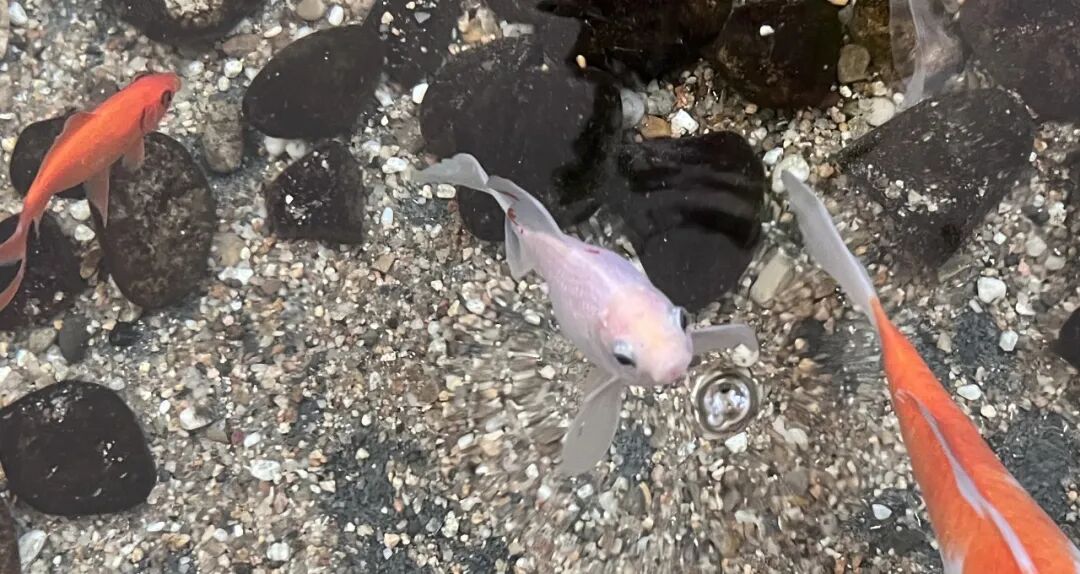
At the Shanghai Natural History Museum’s Nature Exploration Zone, there is a shallow open pond that has become a favorite spot for visitors. Here, people can observe fascinating freshwater creatures up close and experience the wonders of the underwater world.
Among all these aquatic residents, one fish clearly steals the spotlight—the goldfish, undoubtedly the most eye-catching inhabitant of the pond.
1. What Exactly Is a Goldfish?
The famous Chinese medical scholar Li Shizhen wrote in Compendium of Materia Medica (Bencao Gangmu):
“Golden-colored fish can be found among carp, crucian carp, loach, and other species. However, only golden crucian carp can maintain this coloration over time. Since the Song Dynasty, people have begun to keep them, and today they are raised in households everywhere.”
This passage shows that ancient observers had already noticed color mutations—what we now call “goldfish”—appearing in various freshwater fish. Unfortunately, most of these color changes were unstable and could not be reliably inherited.
Crucian carp, however, proved to be the exception.
Over time, the term goldfish became synonymous with golden crucian carp.
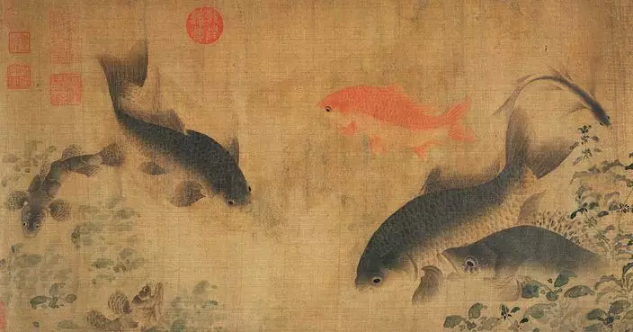
Are Goldfish and Crucian Carp the Same Species?
Fish keepers long observed that goldfish and crucian carp can interbreed freely and produce fertile offspring. Their fry also look nearly identical, suggesting there is no reproductive isolation between them.
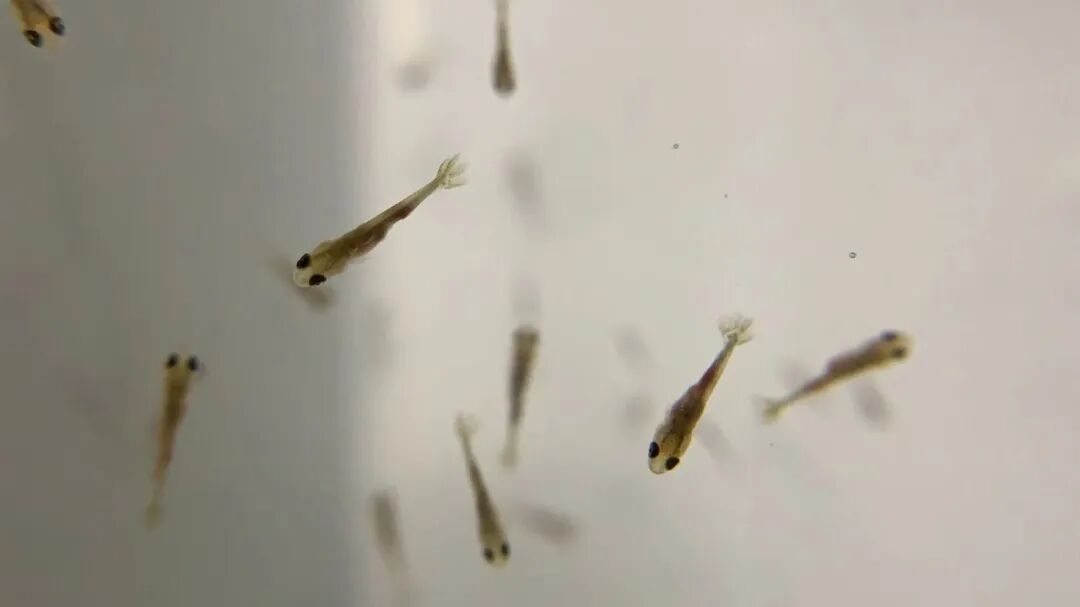
Modern science finally confirmed this.
In 2020, a research team from Fuzhou, known as the “hometown of goldfish,” used genomic analysis to demonstrate that modern domesticated goldfish originated from Carassius auratus (crucian carp) through natural mutation followed by long-term artificial selection.
From a biological classification standpoint, goldfish are not a separate species.
They are simply a domesticated morphological variant of crucian carp, which explains why both share the same scientific name.
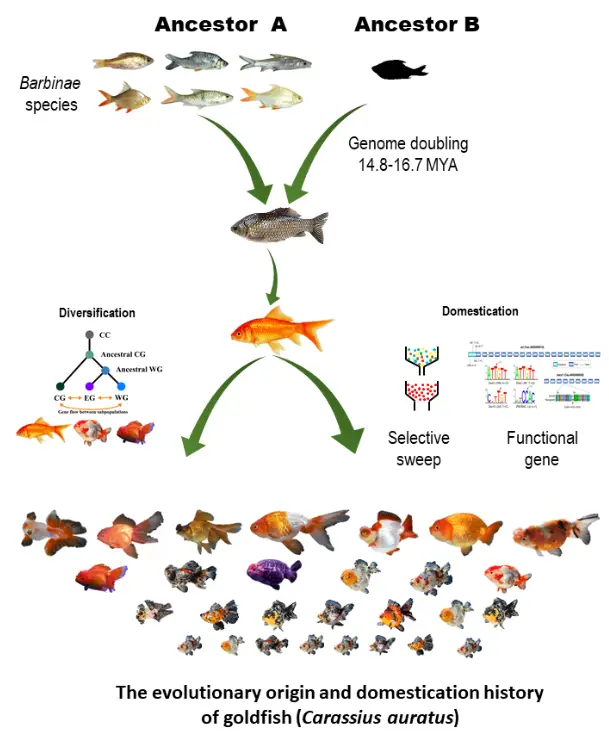
In short: the goldfish you keep at home is, biologically speaking, a crucian carp.
Where Did Goldfish Originate?
By comparing genetic samples from goldfish and wild crucian carp across different regions, scientists found the strongest genetic link with populations from the lower Yangtze River basin.
This strongly suggests that eastern China, particularly areas such as Jiaxing and Hangzhou, was the original domestication center of goldfish—an idea also supported by historical records describing “golden crucian carp” found in Buddhist release ponds.
Goldfish were later introduced to Japan and Europe during the Ming Dynasty, eventually becoming one of the most popular ornamental fish worldwide.
2. They Are All Goldfish: Understanding Goldfish Varieties
The domestication of goldfish went through several stages:
-
Semi-domesticated phase – Wild golden crucian carp kept in temple ponds
-
Aristocratic phase (Southern Song Dynasty) – Raised in private garden ponds
-
Household phase (Ming Dynasty onward) – Kept in bowls and tanks by ordinary families
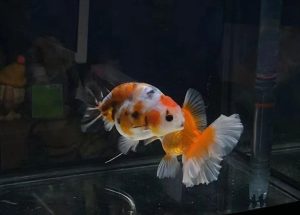
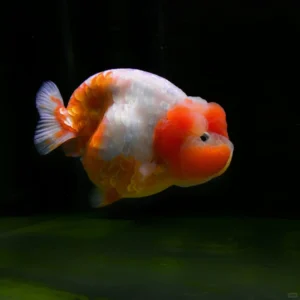
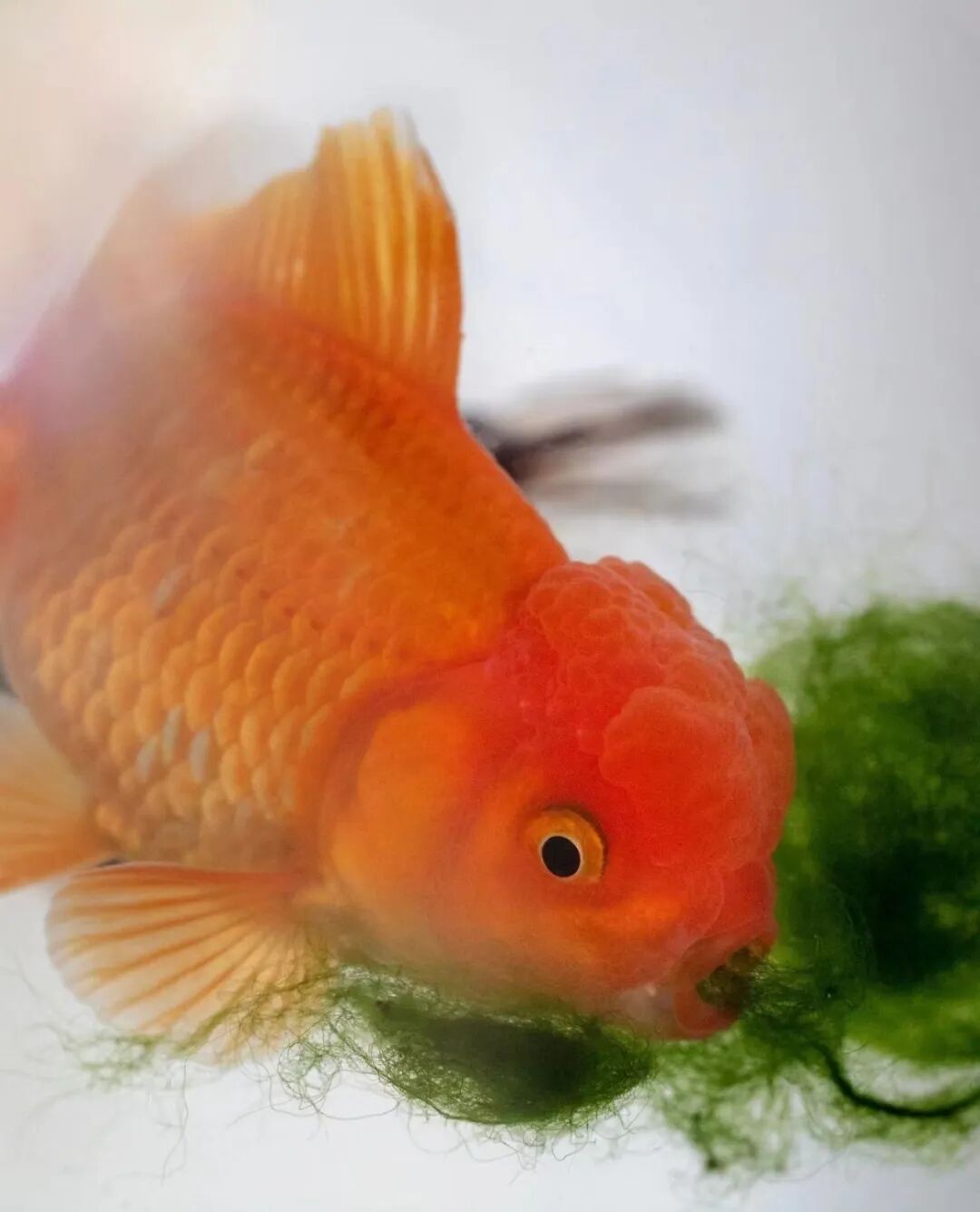
As selective breeding progressed, goldfish evolved from simple red-yellow fish into hundreds of varieties, displaying diverse colors, patterns, fin shapes, and body forms.

The Three Classic Goldfish Lineages
Based on domestication history and morphology, goldfish are traditionally divided into three major groups:
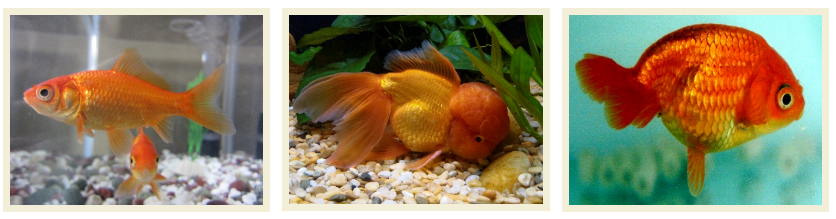
1. Grass-Type Goldfish (Single-Tail Goldfish)
-
Most primitive form
-
Closest in appearance to wild crucian carp
-
Strong swimmers, hardy, and long-lived
2. Wen-Type Goldfish
-
Shorter bodies, pointed heads, rounded bellies
-
Long, flowing double tails
-
Among the earliest domesticated ornamental forms
3. Egg-Type Goldfish
-
Rounded, egg-shaped bodies
-
No dorsal fin
-
Often considered the most ornamental and delicate
Modern classifications also include:
-
Dragon-Eye (Telescope Eye) Goldfish
-
Dragon-Back Goldfish, which combine traits of egg-type and dragon-eye varieties
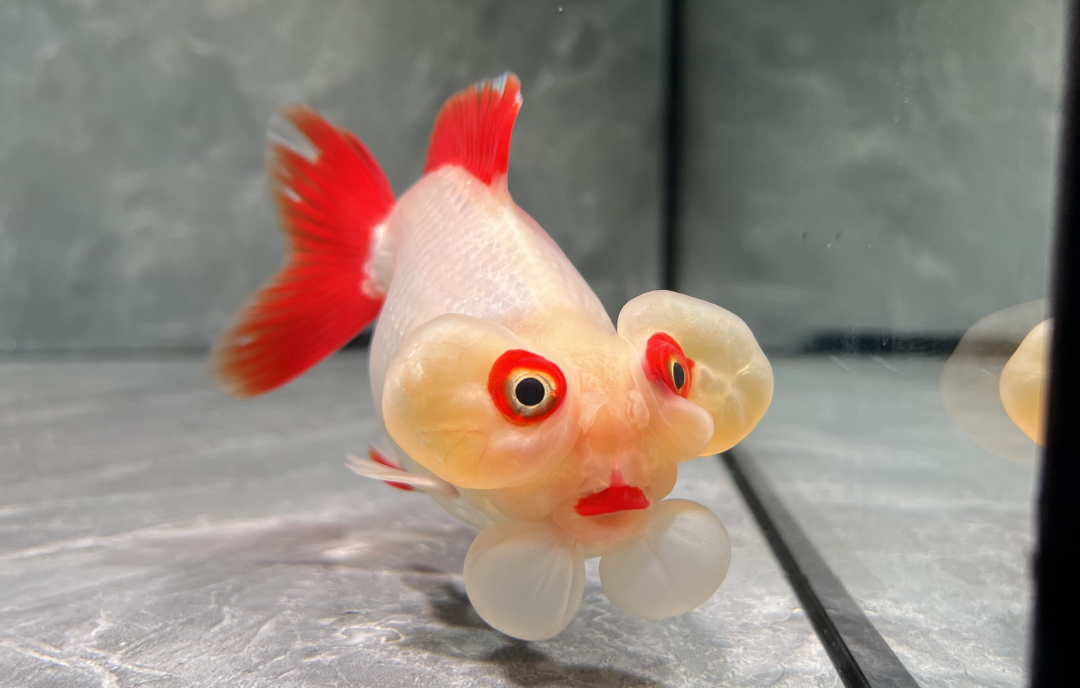
As breeding techniques continue to improve, new goldfish varieties are still being created today.
3. These Are Not Goldfish: Commonly Confused Species
When visiting aquarium markets, many people refer to any colorful ornamental fish as a “goldfish.” However, this often leads to confusion—especially with koi and Betta fish.
Goldfish vs. Koi
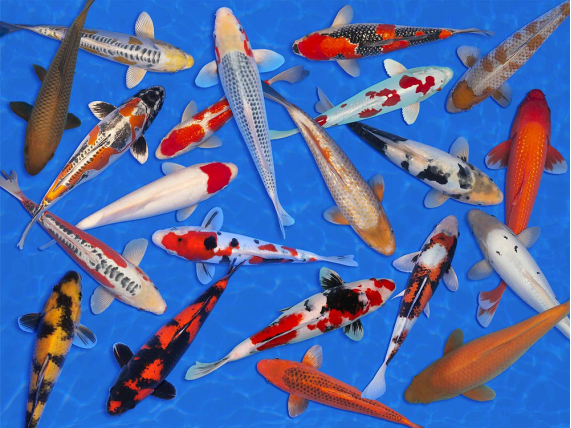
Koi are selectively bred from common carp, not crucian carp.
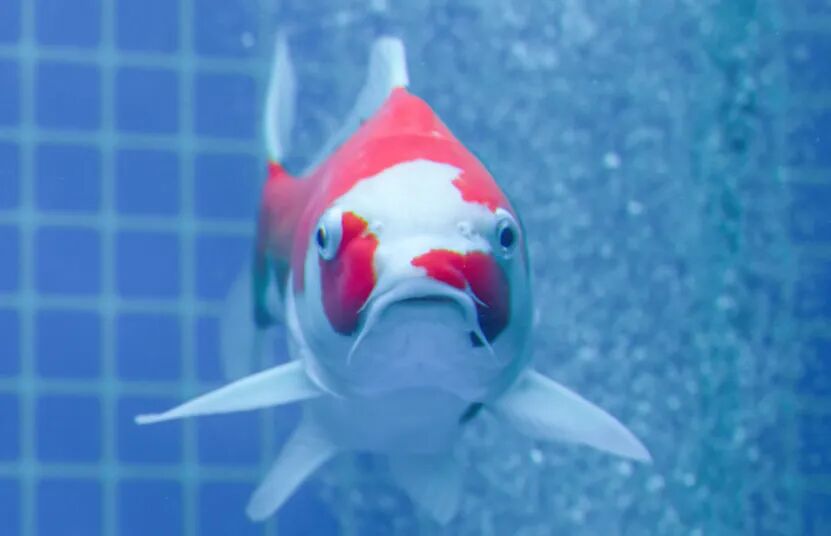
The easiest way to tell them apart:
Koi have two pairs of barbels (whiskers) near their mouths. Goldfish do not.
Other key differences:
-
Koi grow rapidly and can exceed 60–70 cm in length
-
They require large outdoor ponds
-
Their patterns are best viewed from above
Because of these traits, koi are unsuitable for standard home aquariums.
Goldfish vs. Betta Fish
Betta fish (Siamese fighting fish) are tropical fish from the Gourami family.
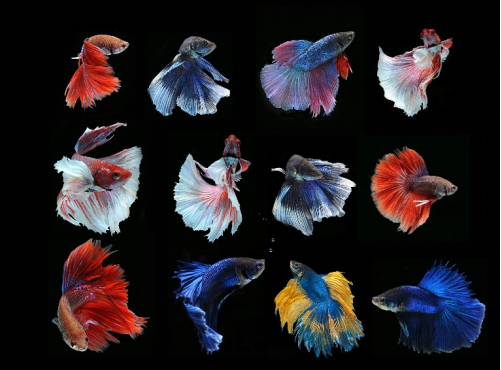
They differ from goldfish in almost every way:
-
Require water temperatures above 20°C (68°F)
-
Possess a labyrinth organ, allowing them to breathe air
-
Extremely territorial and aggressive
Unlike goldfish, bettas should never be kept in groups unless carefully managed.
Frequently Asked Questions About Goldfish
Do Goldfish Eat Until They Die?
No scientific evidence proves that goldfish lack a sense of fullness. In fact, goldfish often stop eating once they are satiated.
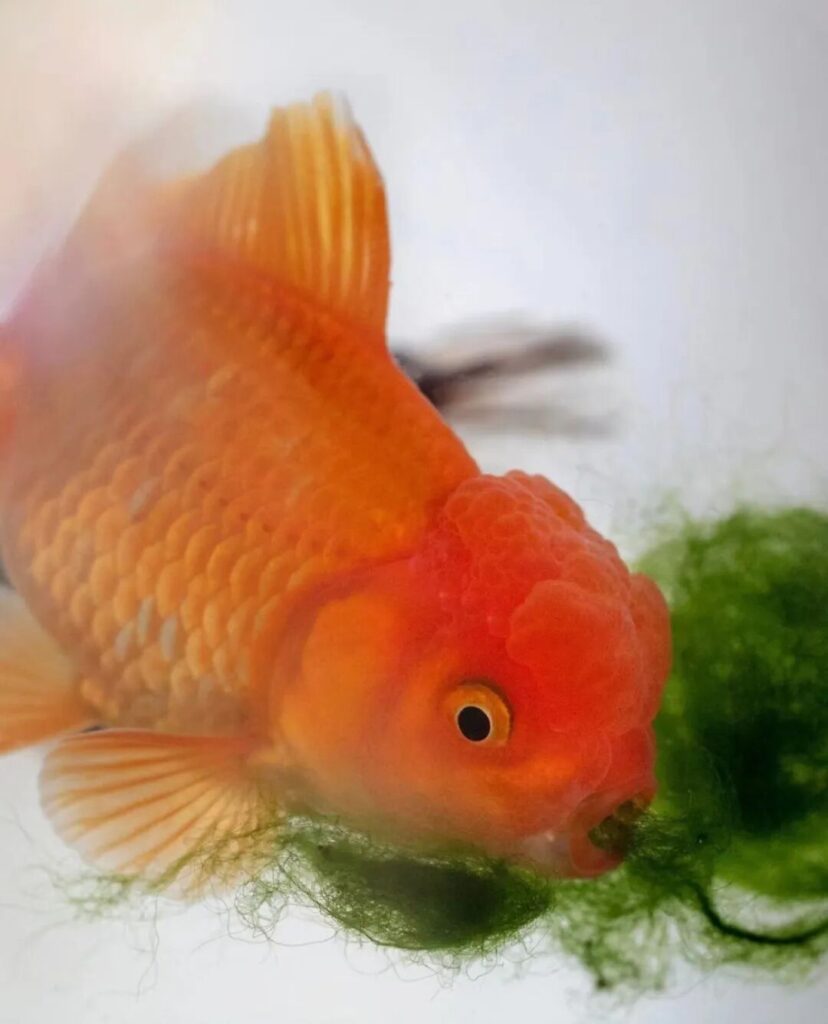
However, overfeeding is still dangerous because:
-
Fancy goldfish swim poorly and gain weight easily
-
Excess food rapidly degrades water quality
-
Poor water conditions significantly increase mortality
Goldfish are omnivores, but moderation is essential.
Do Goldfish Have Short Lifespans?
Absolutely not.
Under proper care, goldfish commonly live 10–15 years.
The Guinness World Record holder, a common goldfish named Tish, lived for 43 years.
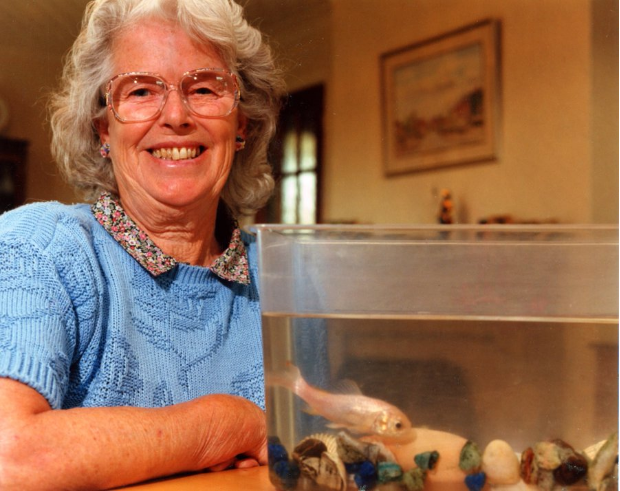
Most early goldfish deaths are caused by improper care, not genetics.
Do Goldfish Have Only a 7-Second Memory?
This is a myth.
Scientific experiments have shown that goldfish:
-
Retain memories for weeks or even months
-
Can learn complex tasks, including navigation
As for recognizing their owners, definitive proof is still lacking. However, studies on archerfish show that some fish species can recognize human faces—so it may not be impossible for goldfish as well.

Final Thoughts
Goldfish are far more than simple decorative pets. They represent over a thousand years of domestication history, combining natural mutation, human culture, and selective breeding.
Understanding what goldfish truly are—and what they are not—helps us appreciate them not only as ornamental fish, but as a remarkable example of humanity’s long relationship with nature.